
Why HPLC Ion-Exchange Remains the Reference Methodology in HbA1c Determination
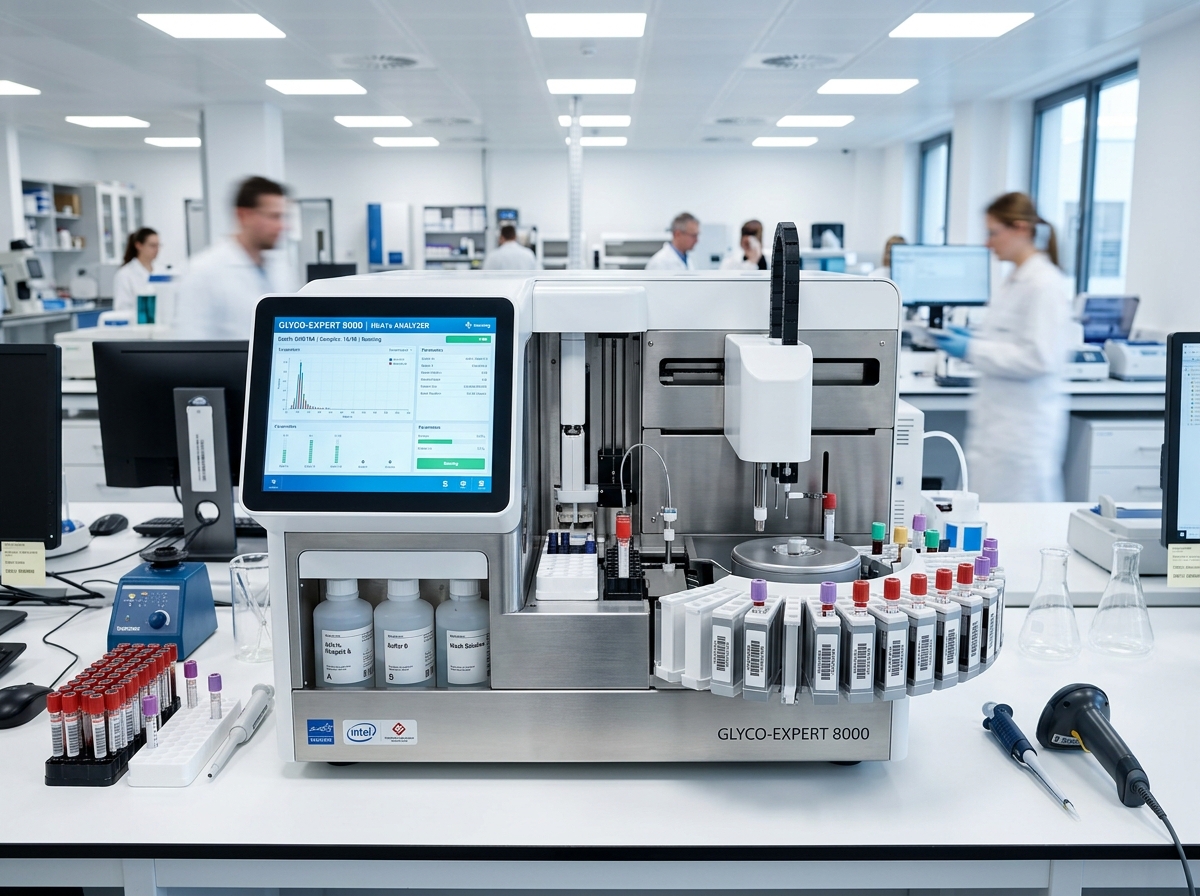
In contemporary clinical laboratory practice, accurate determination of glycated hemoglobin (HbA1c) is indispensable for both diagnosing diabetes mellitus and monitoring glycemic control. However, variations in patient hemoglobin structure can substantially interfere with test accuracy.
The Challenge of Hemoglobin Variants
Globally, hundreds of abnormal hemoglobin variants exist. While many are clinically silent, variants such as HbS, HbC, HbD, and HbE can lead to clinically dangerous false positive or false negative results when using non-chromatographic methods that rely on mathematical algorithms or antibody binding.
Direct Chromatographic Separation
Ion-exchange High Performance Liquid Chromatography (HPLC) separates hemoglobin components based on their physical surface charge differences. As samples pass through the high-resolution column, fractions elute at precise retention times, producing a visual chromatogram that allows laboratory staff to inspect the sample profile directly.
Conclusion
Utilizing systems like the HLC-723 series equipped with dual-wavelength detection ensures that HbA1c results are truly standardized against NGSP and IFCC benchmarks, delivering maximum diagnostic confidence to treating clinicians.